

 Christina Nixon
Jehovah’s Witnesses are a globally recognized religious group, known for their door-to-door evangelism and distinct practices. However, beneath their surface lies a controversy that has led many to label them not as a religion but as a cult. For this article we go beyond Kingdom Hall and delve into their beliefs, practices, and why Jehovah’s Witnesses are often compared to dystopian tales like “The Handmaid’s Tale“. It will also explore the emotional toll of their practices on individuals and families, particularly the devastating impact of shunning and strict doctrinal adherence.
Curiosity often leads us down unexpected paths, and for me, it meant stepping into a world I had only observed from the outside. I decided to join Jehovah’s Witnesses, attending their meetings for over a month to immerse myself fully before delving into the controversial accusations that label them as a religious cult. With Netflix’s remarkable documentary “Dancing for the Devil: The 7M TikTok Cult” you can’t help but wonder: how challenging is it to recognize that you’re part of a cult? Attending their meetings, engaging with members, and observing their lifestyles allowed me to gain a deeper understanding of their beliefs and practices. What began as an investigative journey to uncover the truth about their cult accusations turned into an experience that felt eerily similar to the stories portrayed in The Handmaid’s Tale, and Far Cry 5, one of the video games I loved working for, developed by Ubisoft. The parallels are striking and often unsettling, raising the question: how does one realize they are part of a cult when the rules are cloaked in faith and community?

Jehovah’s Witnesses stand as one of the most distinctive and recognizable religious movements in the modern world. Their door-to-door evangelism, refusal to celebrate traditional holidays, and strict adherence to their interpretation of Scripture set them apart. However, beyond their public image lies a history woven with faith, resilience, and allegations of control that have led many to question the true nature of the organization. The story of Jehovah’s Witnesses begins in the late 19th century with Charles Taze Russell, a devout Bible student dissatisfied with mainstream Christianity’s interpretations. In 1870, he started a Bible study group in Pittsburgh, Pennsylvania, aiming to uncover “true” Christian teachings. Russell’s group rejected the traditional views of hell, the Trinity, and the immortality of the soul, focusing instead on the imminent return of Christ and God’s Kingdom.
In 1881, Russell founded the Zion’s Watch Tower Tract Society, which became the cornerstone of the movement’s literature. His writings, particularly in The Watchtower, laid the foundation for what would become Jehovah’s Witnesses, emphasizing the idea that humanity was living in the “last days.” After Russell’s death in 1916, Joseph Franklin Rutherford assumed leadership of the organization. Rutherford, a lawyer by trade, restructured the movement, centralizing authority under what he called “God’s visible organization.”
In 1931, Rutherford adopted the name Jehovah’s Witnesses to distinguish the group from other Bible study movements and emphasize their mission to be witnesses for Jehovah, the name of God as revealed in Scripture. Under his leadership, the group expanded globally, adopting practices like door-to-door preaching and strict neutrality in political matters. By the mid-20th century, Jehovah’s Witnesses had established themselves as a global organization. Their teachings spread through a combination of evangelism and literature distributed in hundreds of languages. Conventions, assemblies, and public talks became hallmarks of their community. Over the decades, Jehovah’s Witnesses have faced accusations ranging from covering up abuse cases to using fear tactics to maintain control. Their strict doctrine around medical practices, such as refusing blood transfusions, has led to high-profile legal battles and personal tragedies.
In HULU’s acclaimed series The Handmaid’s Tale, Gilead is a theocratic regime where every aspect of life is dictated by rigid religious dogma. Women, stripped of their autonomy, are indoctrinated into obedience, with dissent punished harshly. Within Jehovah’s Witnesses, I observed a similar structure of control, though subtler in its execution. The Governing Body acts as the ultimate authority, interpreting scripture in a way that leaves no room for personal belief or deviation. Members are expected to adhere strictly to their teachings, from how they dress to whom they associate with. Any dissent—questioning the doctrine or choosing to leave the organization—is met with shunning, a practice that isolates individuals from their families and communities.
Jehovah’s Witnesses maintain strict control over their propaganda materials, including videos and texts, by making them exclusively available through their official app, developed for Android and Apple devices. This deliberate choice ensures that their content is accessed only within the framework they provide, reinforcing their narrative and limiting external distribution. The app, known as JW Library, serves as the sole digital platform for their teachings, creating a closed ecosystem for followers to engage with their doctrine.
Jehovah’s Witnesses are taught to avoid close relationships with non-members, including extended family. Celebrations like birthdays and holidays are forbidden, reinforcing separation from mainstream culture. While these practices are framed as acts of devotion, they often leave members isolated and reliant on the organization for their social and emotional needs.
While listening to their creative misinterpretations of various Biblical passages, I realized that religion still holds an immense power – one that is misused in today’s society. Too often it becomes a weapon of control rather than a guide toward spiritual growth and personal transformation. What compels someone to build their life around false hopes of salvation, redemption, and immortality? What drives a person to devote half their existence to a path of isolation, turning away from the very blessings they once prayed for? And what kind of belief is so consuming that it blinds us to see the radiant gift of life, the joy found in our children, our friends, our family? In our deep faith, the pursuit of the divine might come at the cost of the sacred beauty already present in our lives.
As I attended meetings and engaged with members I couldn’t ignore the tension between their false expressions of care and love for their new members and the strict boundaries that define their lives. Beyond Kingdom Hall, Jehovah’s Witnesses emphasize strict guidelines for young adults when it comes to forming relationships and friendships. They are taught to avoid associating with individuals who engage in partying, use bad language, smoke, or drink excessively, as these behaviors are considered contrary to the organization’s moral standards. Presenting themselves as guides for young people seeking a path to spiritual fulfillment, most of the videos aimed at teenagers have a mix of control, fear, and an unsettling call for isolation from the world in their underlying tone. Young members are encouraged to build friendships and relationships exclusively within the organization. The videos, subtly, and sometimes overtly, warn against forming bonds with those who don’t share their beliefs. They are told that outsiders could pull them away from their “spiritual goals.” What this translates to in reality is a life with friendships defined not by shared interests and passions, but by conformity to doctrine.
Romantic relationships with non-members are strictly prohibited, with the expectation that any relationships must be formed only within the organization to ensure adherence to its rules and beliefs.
Another recurring theme is the expectation to dedicate hours every day to Bible study at home. This isn’t framed as a choice or a hobby but as a necessary commitment to remain “spiritually strong.” This daily ritual leaves little room for individuality, exploration, creativity or the pursuit of personal passions outside the cult.
The warnings against associating with those who enjoy social activities like parties add another layer of control. In the guise of protecting young members from “worldly influences”, the videos encourage an “us-versus-them” mentality, as though enjoying life’s simple pleasures is inherently wrong. Similar to other forms of indoctrination, we were encouraged to cut off ties with most of the outside world, devote our lives to the group’s teachings, and view dissent as dangerous. For people growing up in such an environment, their world is narrowed to such an extent, that their friendships are pre-approved, their time micromanaged, and their choices policed by fear of spiritual failure. They are stripped of the freedom to question, to grow, and to discover their own path – a freedom that should be their birthright. Life should be about balance. About learning from the differences in others, embracing joy without guilt, and seeking wisdom without fear.

In the Jehovah’s Witnesses organization, women’s roles are notably limited, reflecting a strict adherence to traditional gender roles as interpreted from their understanding of biblical teachings. Women are prohibited from holding leadership positions or serving as elders or ministers. Instead, their roles are primarily supportive, such as assisting in congregational activities, teaching children, or accompanying men in door-to-door preaching efforts.
Beyond Kingdom Hall, Jehovah’s Witnesses prohibit celebrating birthdays and holidays, arguing that these practices have pagan origins and do not honor God. However, their reliance on scriptures like Exodus 32:1-6, which condemns idolatrous feasts, is often seen as selective. Critics point to passages such as Luke 22:17-20, where Jesus encourages his followers to remember him through the act of sharing bread and wine—a practice akin to commemorating an event. This contrast highlights the Witnesses’ rigid interpretation of scripture, which often ignores broader Christian traditions of celebration and joy.
Romans 13:1-2 emphasizes the importance of respecting governing authorities as God’s servants. Yet, Jehovah’s Witnesses defy this teaching when it comes to their own congregation. Members who leave or are disfellowshipped are often treated as outcasts, shunned by friends and family. This practice of ostracism contradicts the biblical principle of loving one another and respecting individual autonomy.
Shunning, one of the most devastating practices among Jehovah’s Witnesses, is a rule that mandates cutting off all ties with those who leave the congregation. Parents are expected to ignore their own children, siblings to avoid contact with one another, and friends to turn their backs. The emotional toll is immeasurable, leading many to depression, anxiety, and even thoughts of suicide.
Many former members have written about their lives while being members of JW beyond Kingdom Hall. The personal stories on the blog “The Odd Life of Jehovah’s Witnesses” explore experiences and reflections, highlighting themes of fear, control, and theological contradictions. “People always wonder why there are 2 JWs at their door but only one speaks. It’s not that one is new and the other is teaching them. It’s because they take turns. You knock on every door until you find someone home. Then the other person does the same. Another reason they go in pairs is just in case something dodgy happens.”
The book studies, typically held during weekly meetings (Tuesday evening and Sunday morning), focus on literature published by the Watchtower Bible and Tract Society. Books and study guides, such as “The Watchtower” or “Awake!“, are studied in a question-and-answer format. A designated elder or ministerial servant facilitates the study, and attendees are expected to read, highlight key points, and participate by providing answers sourced directly from the materials. This rigid method discourages critical thinking or outside interpretation, as responses are expected to align with organizational teachings. Members are discouraged from consulting outside sources, as non-witness literature is labeled as spiritually harmful (the work of Satan). This monopolization of information restricts exposure to differing viewpoints, a hallmark of controlling groups.
I have found the book studies conducted by Jehovah’s Witnesses at the Kingdom Hall to be designed to instill a uniform understanding of their doctrines and practices, reflecting the structured and controlled environment often associated with high-control religious groups. In the “Odd Life Of Jehovah’s Witnesses”, the author describes: “At the book study meetings JWs consider one of Watchtower Society’s publications. The pages to be covered were assigned ahead of time so that the entire worldwide brotherhood would be considering the same material on the same week. The questions for each paragraph were printed at the bottom of the page. Ahead of the evening of the book study you would read each paragraph and underline or highlight the answers.”
Those part of the religious organization are strongly discouraged from exploiting their talent “to become rich and famous”(…) “Forget about dancing, acting, or writing anything other than letters (…) Instead, you should spend every spare moment trying to get everyone to become a JW so that they can be spared execution by God. Your vocation is the ministry; your avocation is your job.” You had to take part twice per week to their meeting, physically or online, if you had work commitments, even if that meant risking your job.
These book studies are a tool for indoctrination, ensuring members are well-versed in the organization’s beliefs while discouraging independent thought, a key characteristic of cult-like behavior.

Here are some of the restrictive rules that Jehovah’s Witnesses adhere to:
- Not allowed to associate with coworkers after business hours in social settings
- Not allowed to disagree with the organization’s rules and code of conduct
- Not allowed to join the armed forces and defend their country
- Not allowed to salute the flag
- Not allowed to vote
- Not allowed to run for leadership in any organization
- Not allowed to discuss politics, campaign for a political candidate, be involved in a union strike
- Not allowed to use a gun for protection or become a police officer
- Not allowed to donate blood and to have blood transfusions
- Not allowed to read books, magazines, publications and literature from other religions, buy anything from a church store or to donate items to a church. Jehovah’s Witnesses believe that they represent the only real Christian religion.
Jehovah’s Witnesses interpret Matthew 24:45-47—the parable of the “faithful and discreet slave”—as a prophetic reference to their Governing Body. In this passage, Jesus speaks of a servant appointed over his household to provide spiritual food at the proper time. According to Jehovah’s Witnesses, this “faithful slave” refers exclusively to their leadership, which they claim was chosen by Jesus in 1919 to dispense spiritual truths to his followers. Jehovah’s Witnesses teach that this parable is a prophecy, not merely a moral teaching. They claim that their organization, led by the Governing Body, fulfills the role of the “faithful slave.” They believe that Jesus entrusted the Governing Body with the sole responsibility of interpreting scripture and providing spiritual guidance to the global congregation. This interpretation places the Governing Body in a position of unparalleled authority, making it the only channel through which God communicates with humanity.
However, the parable is a general teaching about faithfulness and readiness, not a specific prophecy. Many biblical scholars view it as a call for all Christians to be diligent and responsible in their spiritual duties, not a declaration of a select group having divine authority. The claim that Jesus appointed the Governing Body in 1919 is not supported by scripture or historical evidence. By asserting that the Governing Body is the “faithful slave,” Jehovah’s Witnesses create a hierarchical system that centralizes power and discourages independent scriptural interpretation. This approach contradicts passages such as 1 John 2:27, which emphasizes the role of the Holy Spirit in guiding all believers, not a select group. In conclusion, Jehovah’s Witnesses interpret Matthew 24:45-47 literally when it benefits their organizational structure but treat other parables metaphorically.
By designating their leaders as the “faithful slave,” the organization creates a framework where questioning the Governing Body’s decisions or teachings is equated with questioning Jesus himself. This dynamic aligns with the characteristics of high-control groups and cults, where central leadership claims exclusive spiritual authority.
Beyond Kingdom Hall, Jehovah’s Witnesses exhibit several characteristics that align with widely recognized definitions of a cult:
Absolute Authority: The Governing Body’s interpretations of the Bible are considered infallible, leaving no room for personal beliefs or questions.
Control Over Personal Lives: Members are required to adhere to strict guidelines on everything from social relationships to career choices.
Shunning: Those who leave or are disfellowshipped face severe emotional isolation, as even close family members are forbidden to associate with them.
Apocalyptic Fear: Constant reminders of an impending Armageddon create a climate of fear and urgency, discouraging critical thinking or dissent.
Child Indoctrination: Children are raised with strict rules and limited exposure to ideas outside the organization, effectively isolating them from the wider world.
Isolation: Members are kept apart from the broader world, both physically and ideologically.
Emotional Manipulation: Guilt and shame are used to enforce compliance and discourage dissent.
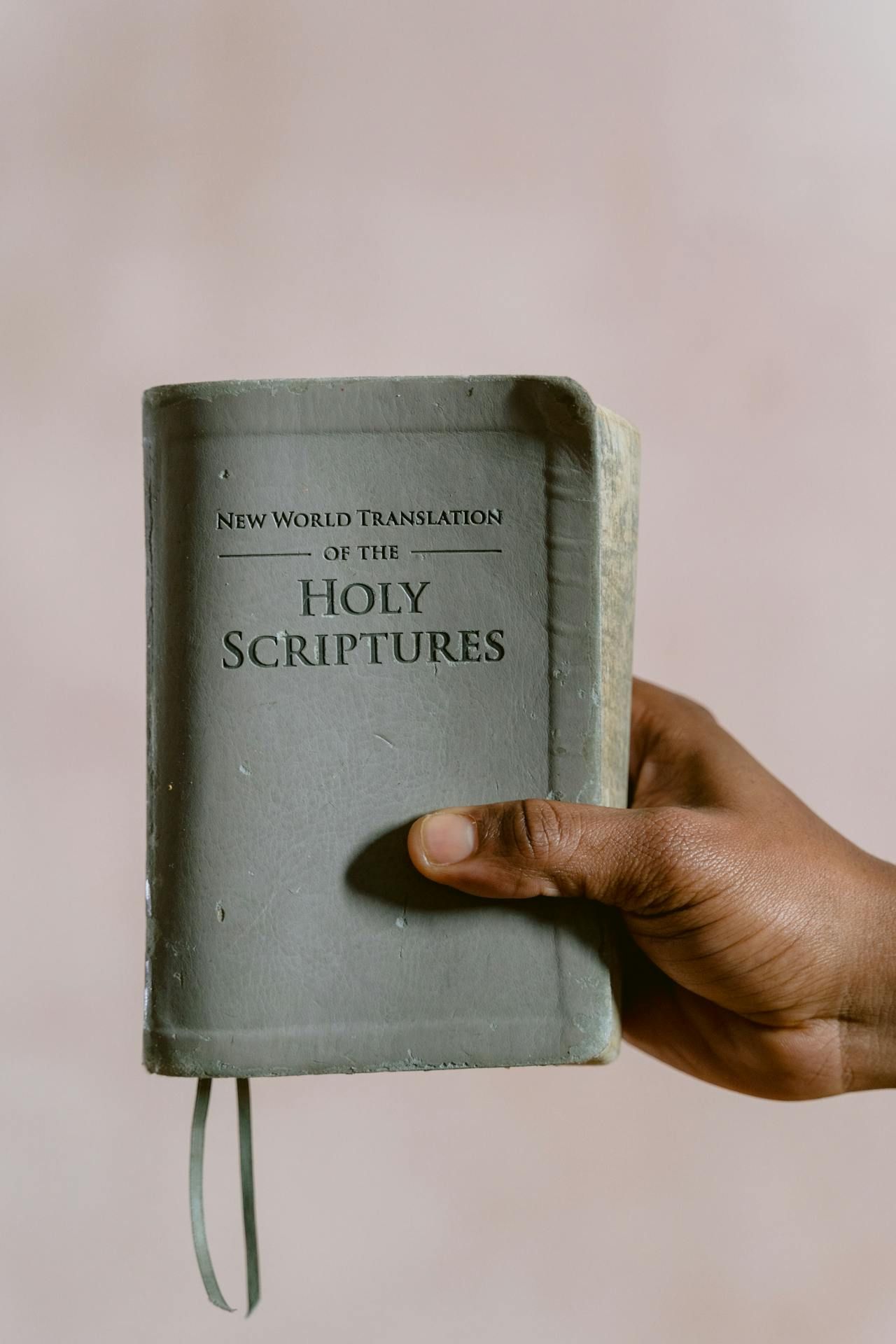
Following the completion of my investigation into the religious practices of Jehovah’s Witnesses, I reached out to Reverend Graham Morgan from The Methodist Church to delve into various aspects of the Interactive Bible Course based on New World Translation of the Holy Scriptures. The Methodist Church is embracing innovation, recognizing the need to be open to the changing nature of our culture and society.
“Who is Jesus? There is surprisingly very little written in this section regarding who Jesus actually is. ‘Begotten’ does not mean created as interpreted in the verse ‘God’s only begotten Son, because Jesus alone was directly created by Jehovah.’ It is an English translation of the Greek word ‘monogenes’ which can be interpreted as ‘single of its kind’, ‘one and only’. Jesus is much more than a helper, he is the Co-creator. Jesus has been given all authority, not just a ‘position of great authority – second only to Jehovah himself’. The interpretation of the Scriptures is here used to imply that Jesus is less than he really is/was at the time.”
We have also discussed the term “cult” and how often the Church is associated with it, omitting the characteristics commonly connected with cults, such as isolation, manipulation, and coercive control.
- One of the most significant differences between the Christian Church and religious cults is the emphasis on community and connection. The Christian faith teaches love, acceptance, and belonging. Churches are places where individuals from all walks of life come together to support one another, share in worship, and engage in fellowship. This communal aspect is grounded in the teachings of Jesus, who encouraged his followers to love their neighbors as themselves. In contrast, many cults often isolate their members, creating barriers between them and the outside world. This isolation serves to maintain control, making it difficult for individuals to question or leave the group. The Christian Church, on the other hand, encourages open dialogue, questioning, and exploration of faith, promoting a healthy and supportive environment.
- Many cults employ fear tactics, strict rules, and shunning to keep individuals in line, stripping them of their agency and autonomy. In such environments, members are often taught to distrust their intuition or dissenting voices, leading to emotional and psychological harm. In contrast, the Christian Church seeks to empower individuals to live out their faith in love and service to others. The core messages of Christianity emphasize free will, personal relationships with God, and the importance of ethical living. Faith should be a source of strength and guidance, not a tool for manipulation. Empowerment through faith leads individuals to contribute positively to society, fostering growth and understanding rather than fear.
- Religious cults frequently discourage questioning and critical thought, fostering an environment where blind obedience is valued over intellectual engagement. In the Christian tradition, however, doubt and inquiry are often seen as integral parts of faith. Many churches encourage congregants to ask difficult questions, seek out their understanding of scripture, and explore the meaning of their beliefs.
- Cults often portray themselves as the sole possessors of truth, leading to an exclusive worldview that alienates outsiders and promotes a toxic ‘us vs. them’ mentality. The Church, at its best, aspires to be a welcoming space where all individuals, regardless of background, can find belonging and hope.

Leaving a religious group like Jehovah’s Witnesses is not easy. The fear of losing everything—family, friends, community—can feel insurmountable. But as I’ve learned from my time inside the cult and the stories of those who have left, questioning and seeking the truth is an act of courage. The teachings that once provided structure and purpose lead to heart-wrenching isolation upon departure, as those still within the cult often choose their allegiance to the organization over the emotional bonds of family. For Jehovah’s Witnesses worldwide, their faith provides a sense of purpose and hope. Many of them are raised within a culture that teaches firm loyalty to the faith above all else. One devoted Jehovah’s Witness shared with me that individuals who decide to leave the faith or explore teachings from other Christian denominations are viewed as having rejected their relationship with God. The act of exploring other beliefs is seen not just as a personal choice but as a significant spiritual betrayal, which is why children are raised inside the religious organization and denied taking part in religious activities outside Kingdom Hall.
For parents, the fear of losing their spirituality and the false promise of immortality can be so profound that it blinds them to the pain experienced by their children. In their quest for spiritual salvation, they overlook cries for understanding and compassion, dismissing them as signs of spiritual weakness or rebellion. Those who have, in many cases, chosen a path of autonomy and self-discovery are instead met with severed ties and rejection—over the love of a faith that, ironically, also teaches the profound value of love and family.
When individuals leave or are expelled, they are often deemed ‘apostates,’ facing not only ostracism but a complete erasure from their family lives. The adherence to the Witnesses doctrine becomes paramount and so, children, once seen as gifts from God, are suddenly viewed through the lens of doctrine rather than as individuals deserving of love and respect. The teachings of Jesus stand in stark opposition to a system that prioritizes doctrine over divine familial love.

In the aftermath of leaving the Jehovah’s Witnesses, many former members strive for healing, seeking to redefine their identity and cultivate connections beyond the life they once knew. Support groups offer solace—spaces where stories of loss, resilience, and recovery can be shared. It’s important to shine a light on the hope that exists beyond the pain.
In the end, there is hope is for those with open hearts and minds, capable of seeing beyond doctrine to the shared humanity of each individual. We should strive to remember that love, in every shape and form, transcends boundaries, and ultimately, our relationships should embody the very essence of compassion that Jesus embodied.




Thank you for shining a light on this dangerous cult. I was lucky and able to break free. I only hope the rest of my family does the same.
Breaking free from an organization like Jehovah’s Witnesses is no small deal—it takes immense strength to question what you’ve been taught to accept as absolute truth and to reclaim your autonomy. Through stories like these we keep the conversations alive and maybe help those who may feel trapped, realize that they’re not alone and that there is a huge community waiting for them on the other side.
Hold on to that hope for your family. Change often takes time.
This is a great article, thank you. I would really love a more in depth explanation of how women are viewed and treated. I appreciate the handmaid’s tale references but I am curious if there is anything you know of to read that digs deeper into the misogyny and patriarchy within the Watchtower Bible and tract society?
I can definitely share my insight on this topic. While doing Bible study with the girl assigned to me, I have been told how women are taught from a young age that their primary role is to submit to their husbands. This obedience is seen as a “divine requirement” and encompasses every aspect of life. Husbands are the decision-makers, while women are expected to follow, regardless of their feelings. And because romantic relationships are strictly regulated, love is confined to those who share the same beliefs and sexual relationships outside of marriage are viewed as sins. For this reason most women are married from a young age (most born in the cult are married at the age of 20 years old). Divorce is rarely justified, as my Bible study partner told me, unless adultery or severe physical abuse occurs. Emotional neglect, unhappiness or incompatibility are not considered valid reasons to leave.
Regarding workplace, women are encouraged to take on jobs that do not interfere with primary duties, such as attending the JW meetings, or being a mother. A woman’s success, ambition or personal growth is often overlooked in favor of her husband’s role as the family leader and provider. All of this in the name of faith. For this reason, women who are part of JW do not desire any equality, freedom of speech or the opportunity to be seen as more than a helper or a follower.